Natural Bridges National Monument
Monday 19 September, 2022
Sipapu Bridge.
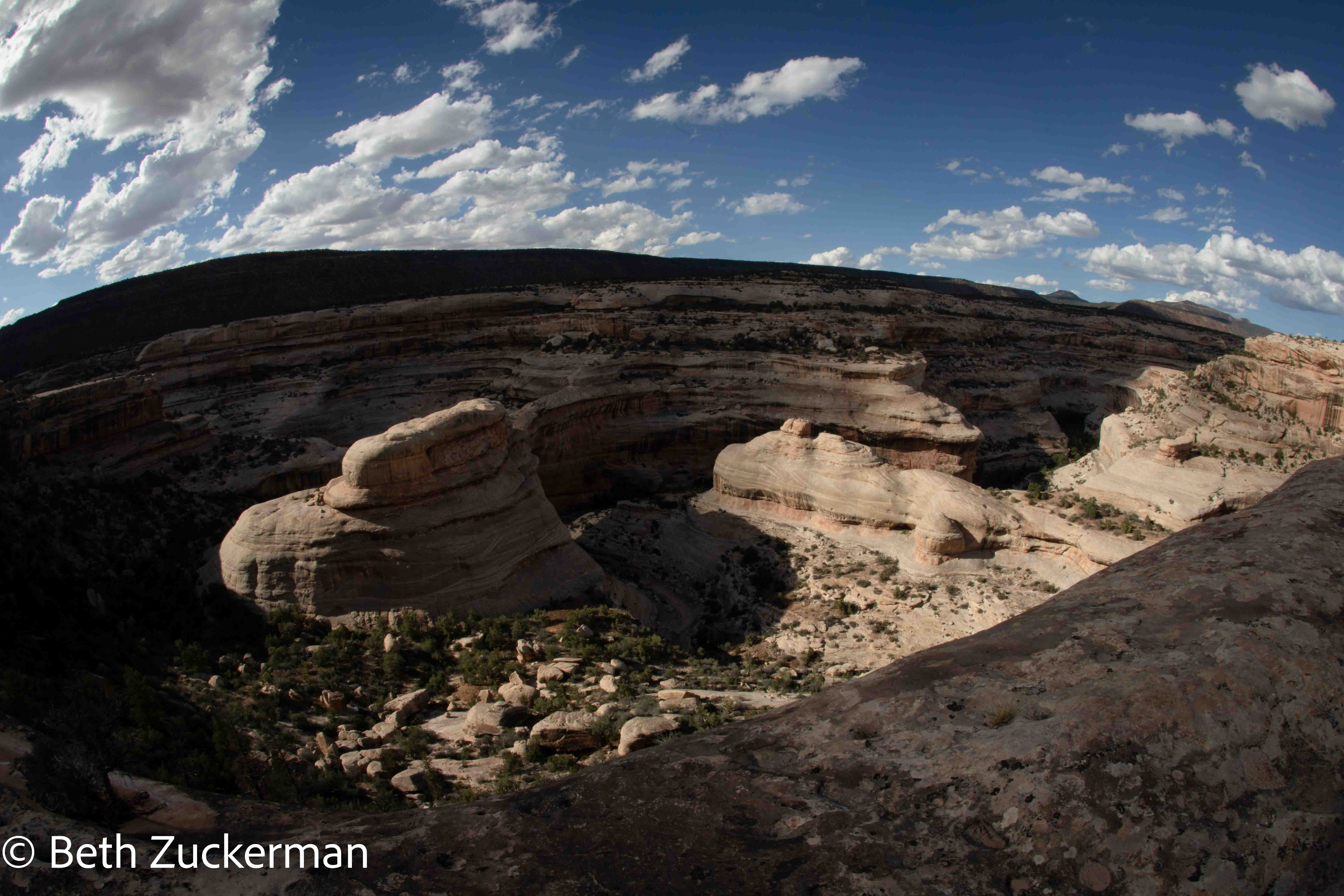
Natural bridges may look as if they are formed by similar processes to arches, but they are not. Arches result from differential erosion in different layers of rock. Natural bridges are places where streams have broken through lower layers of rock. [Geology Underfoot in Southern Utah, Orndorff, Wieder, & Futey, 2006]
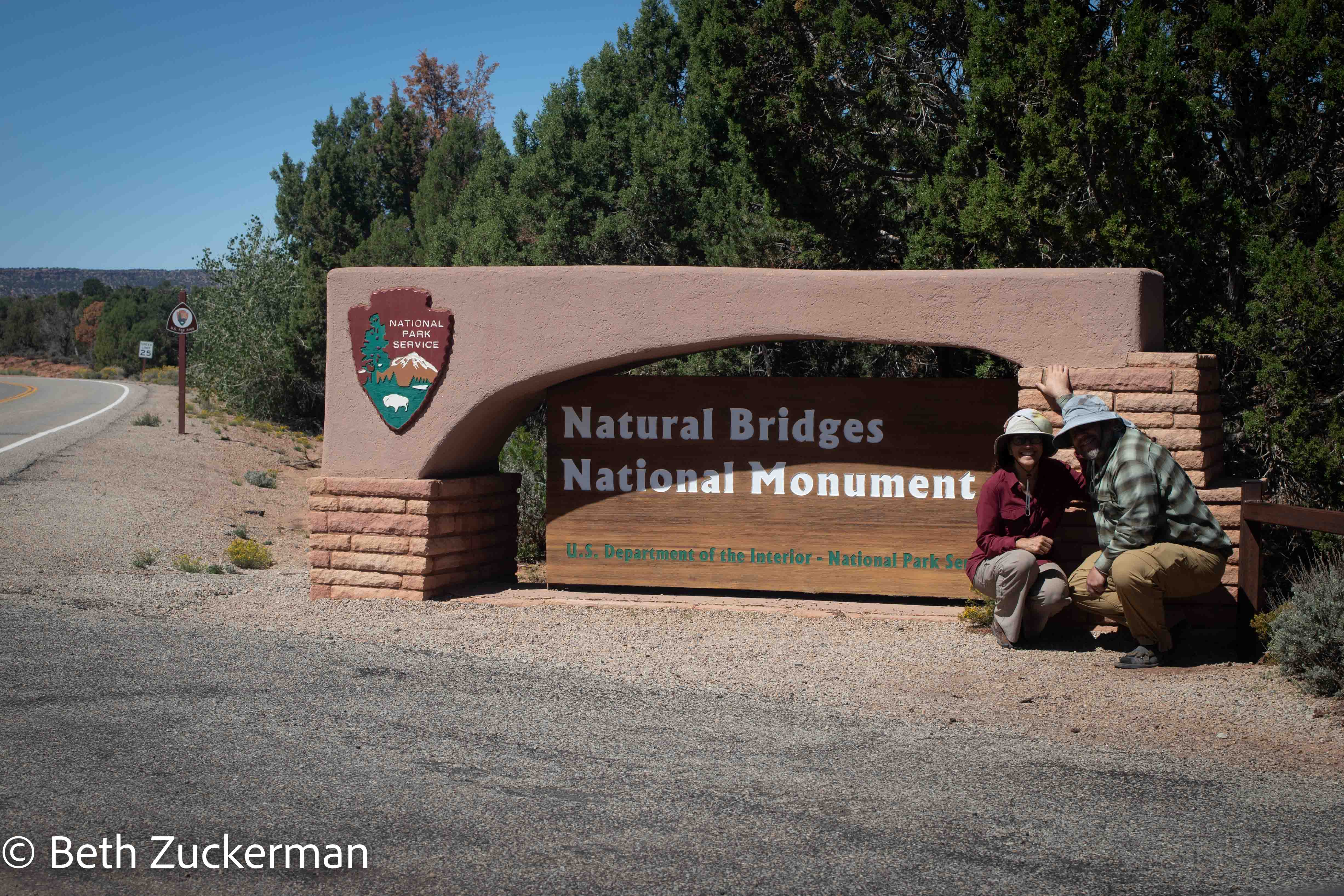
Monument sign.
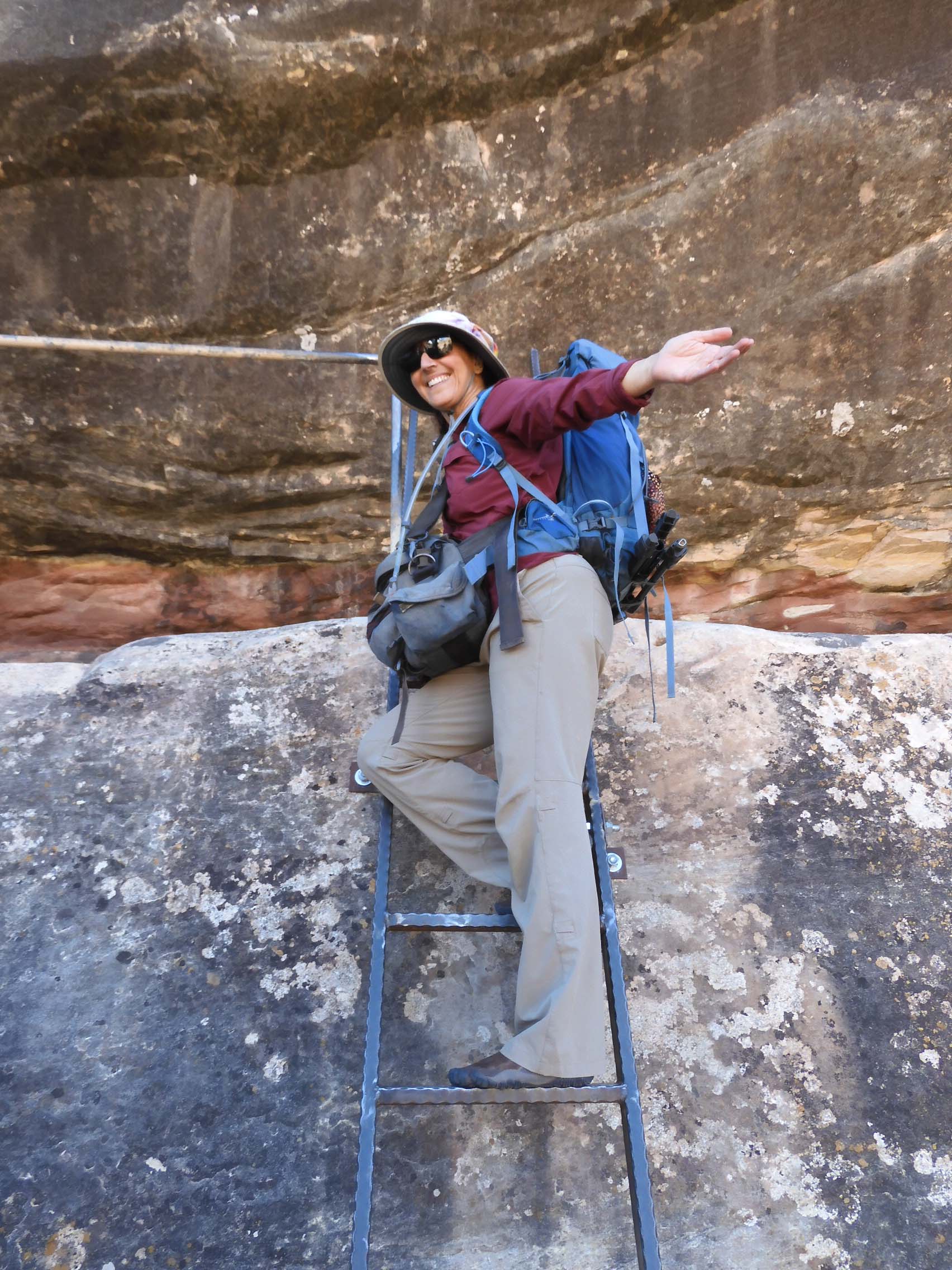
We hiked down a steep trail with ladders. I posed on a ladder for Eric.
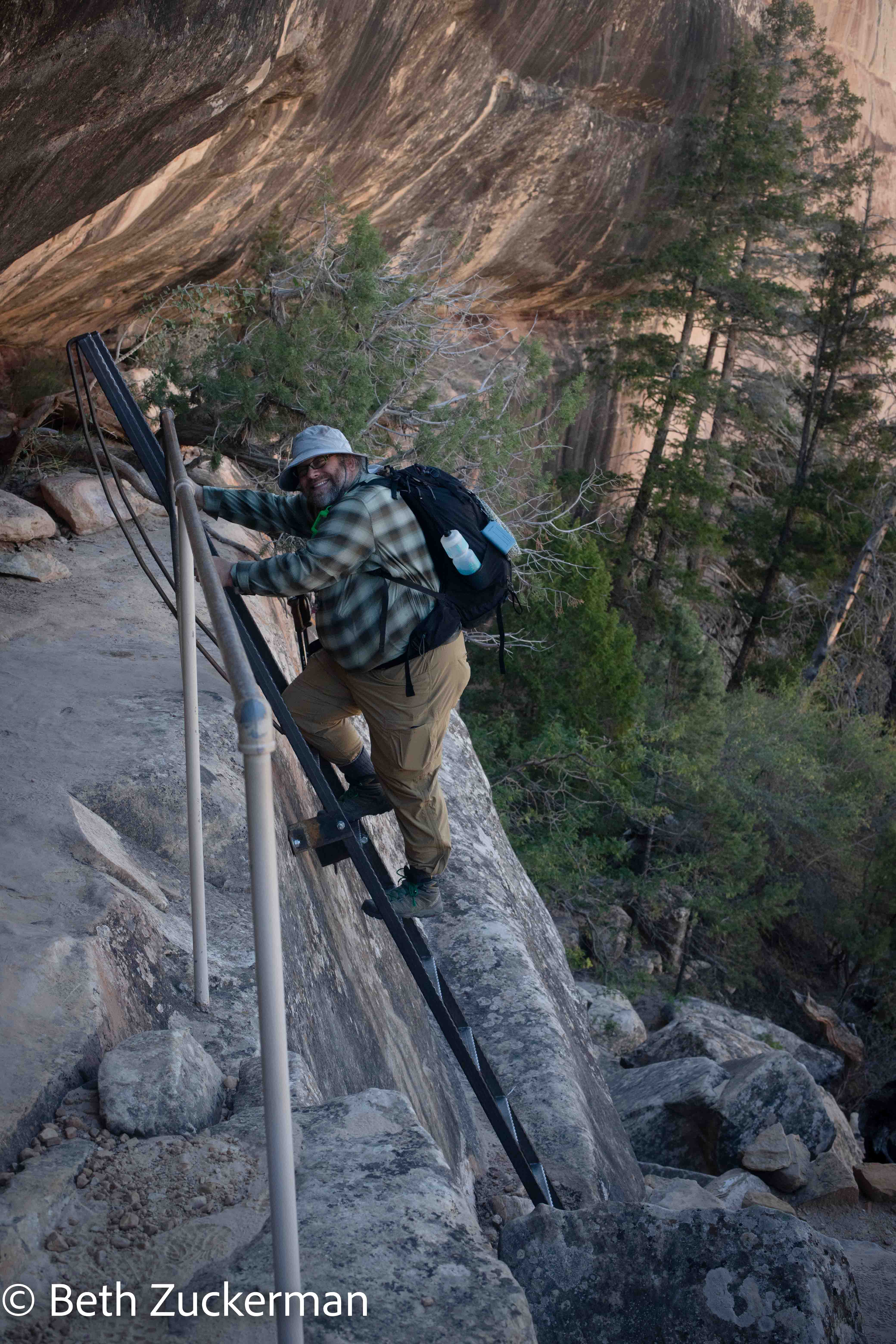
Eric descending a ladder. Apparently, sometime between when the virtual cache that we found here was placed, and the present day, these formerly-wooden ladders were replaced with metal ones.
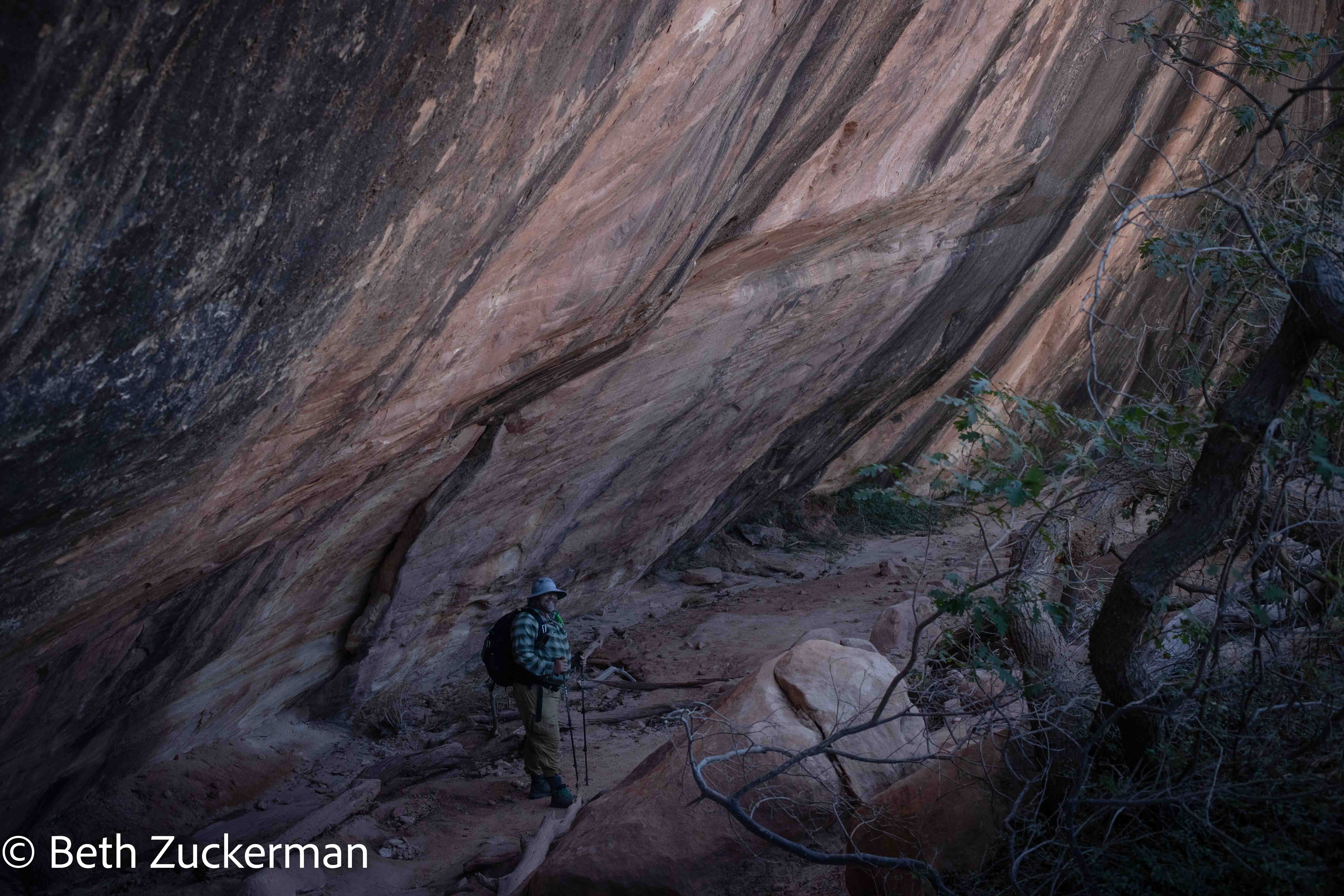
The rock walls reminded me of Zion... and Eric of Thacher Park (near Albany NY), a little.
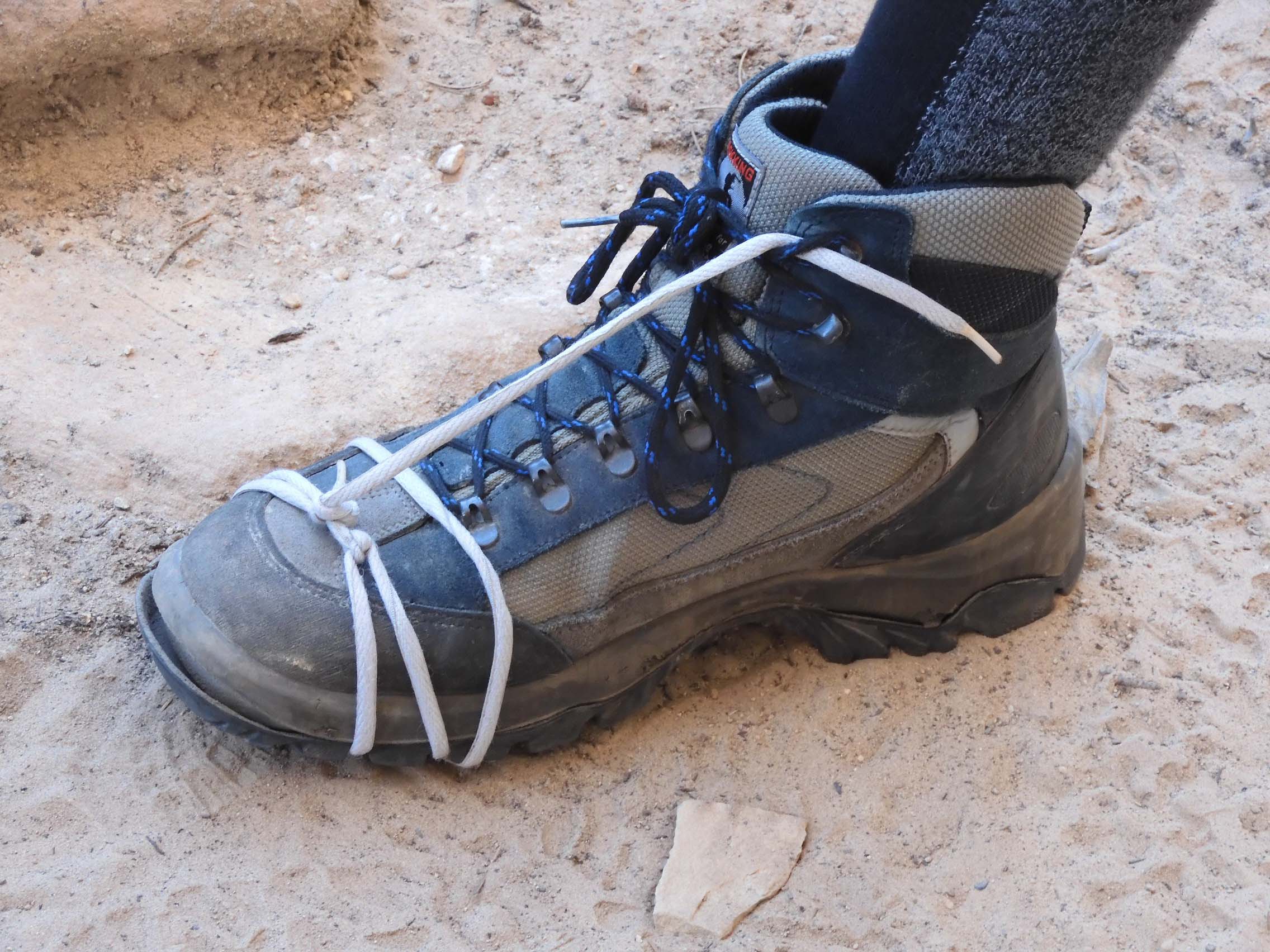
I gave a spare shoelace to a German hiker who was losing his sole. Photo by Eric.
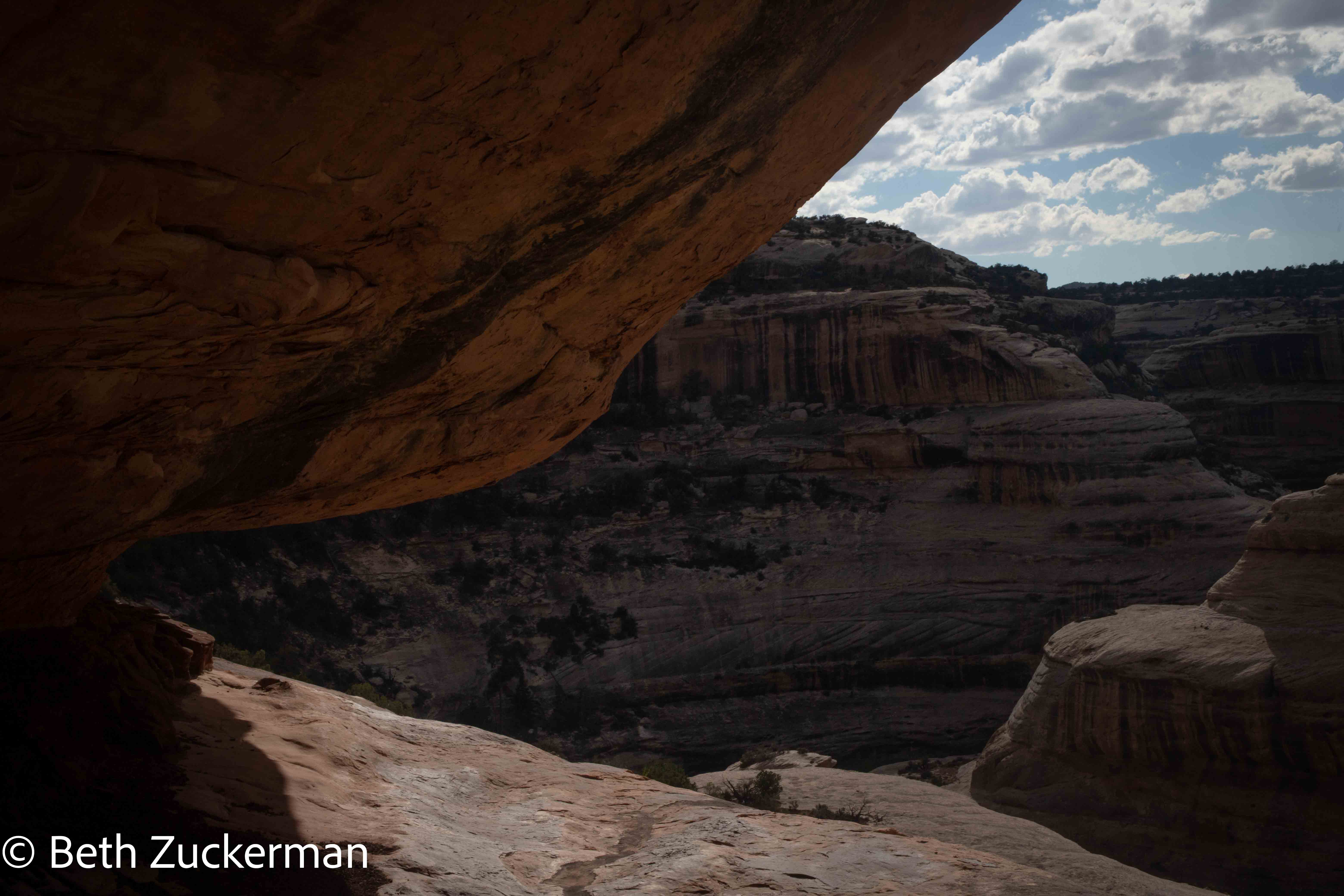
Overlook overlooking the canyon.
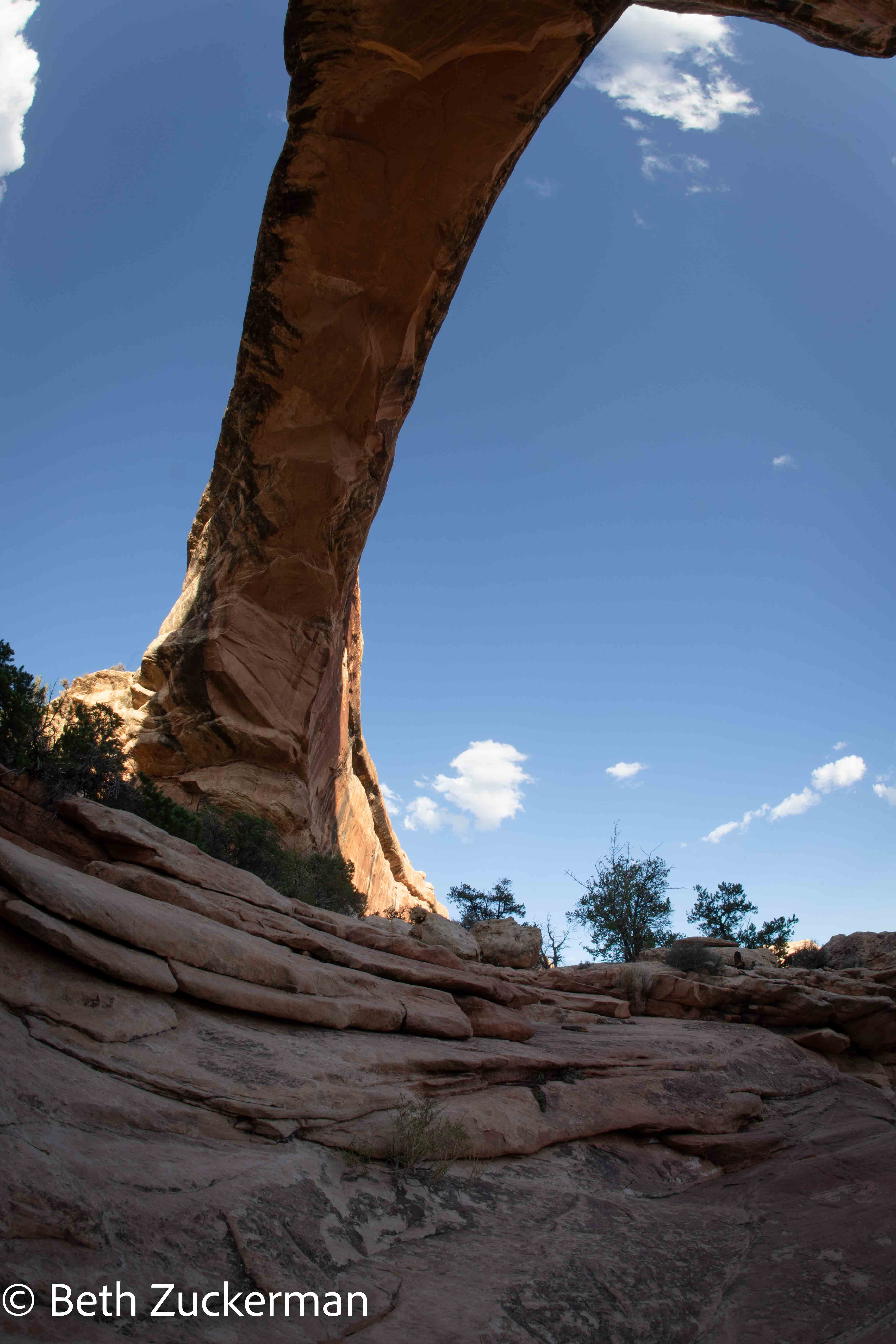
We came to views through Sipapu Arch.

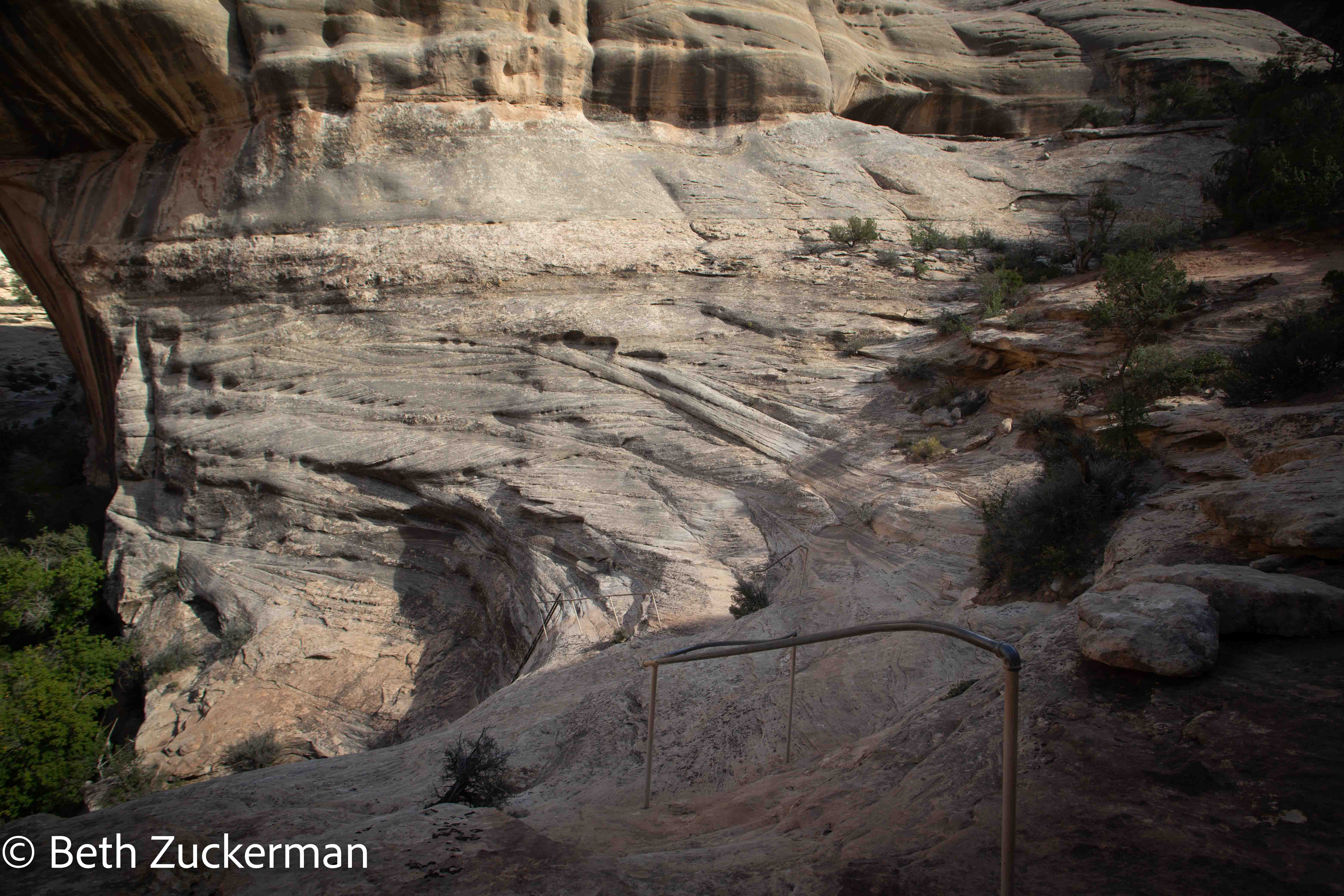
The trail eventually became so steep that the Park Service had installed handrails in the rock.
At last, we reached the bottom!

Enormous Sipapu Arch, spanning 87 m/268 feet, and 67 m/220 feet high, is the largest of the arches at Natural Bridges National Monument. [Geology Underfoot in Southern Utah, Orndorff, Wieder, & Futey, 2006]

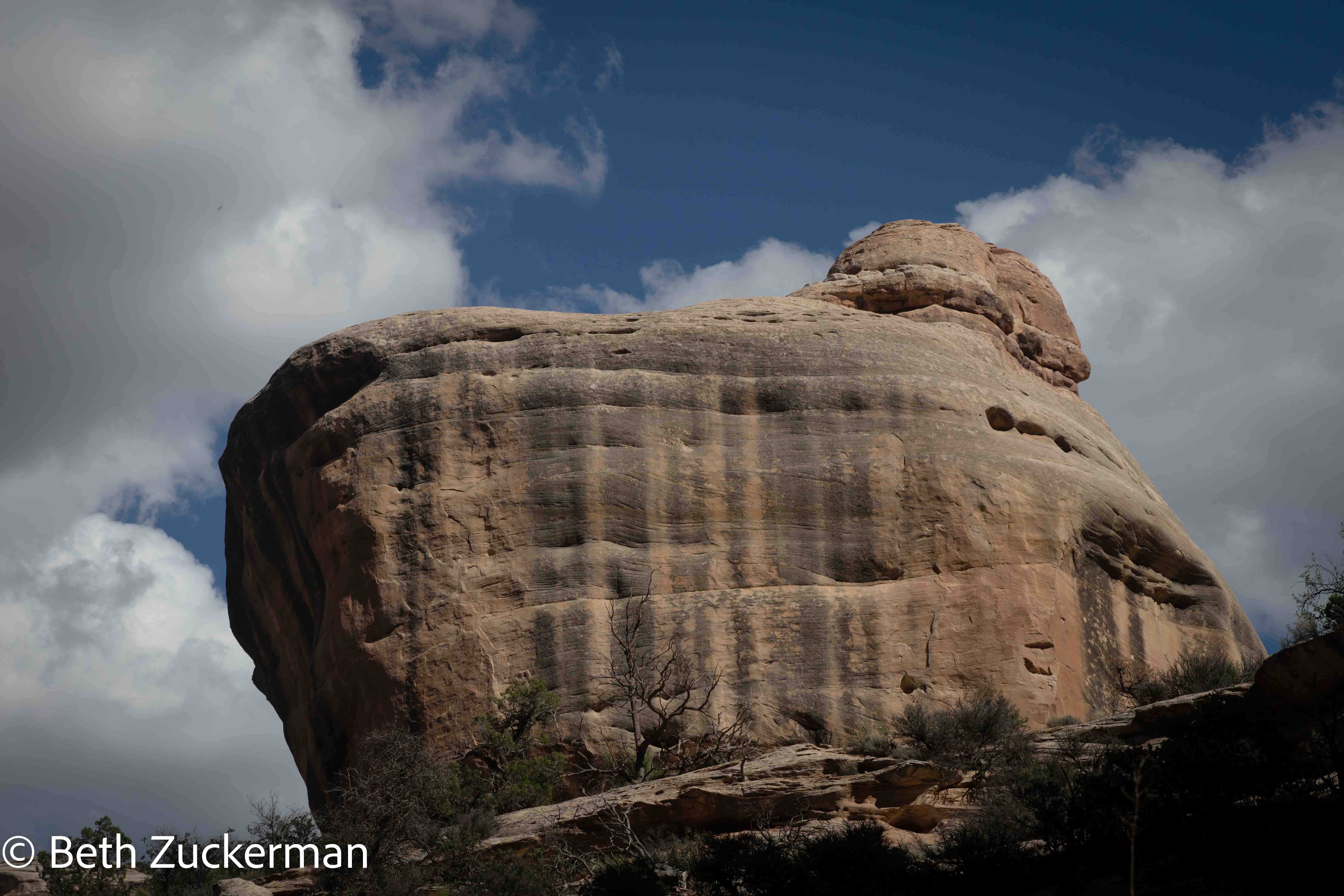
A formation above the arch.
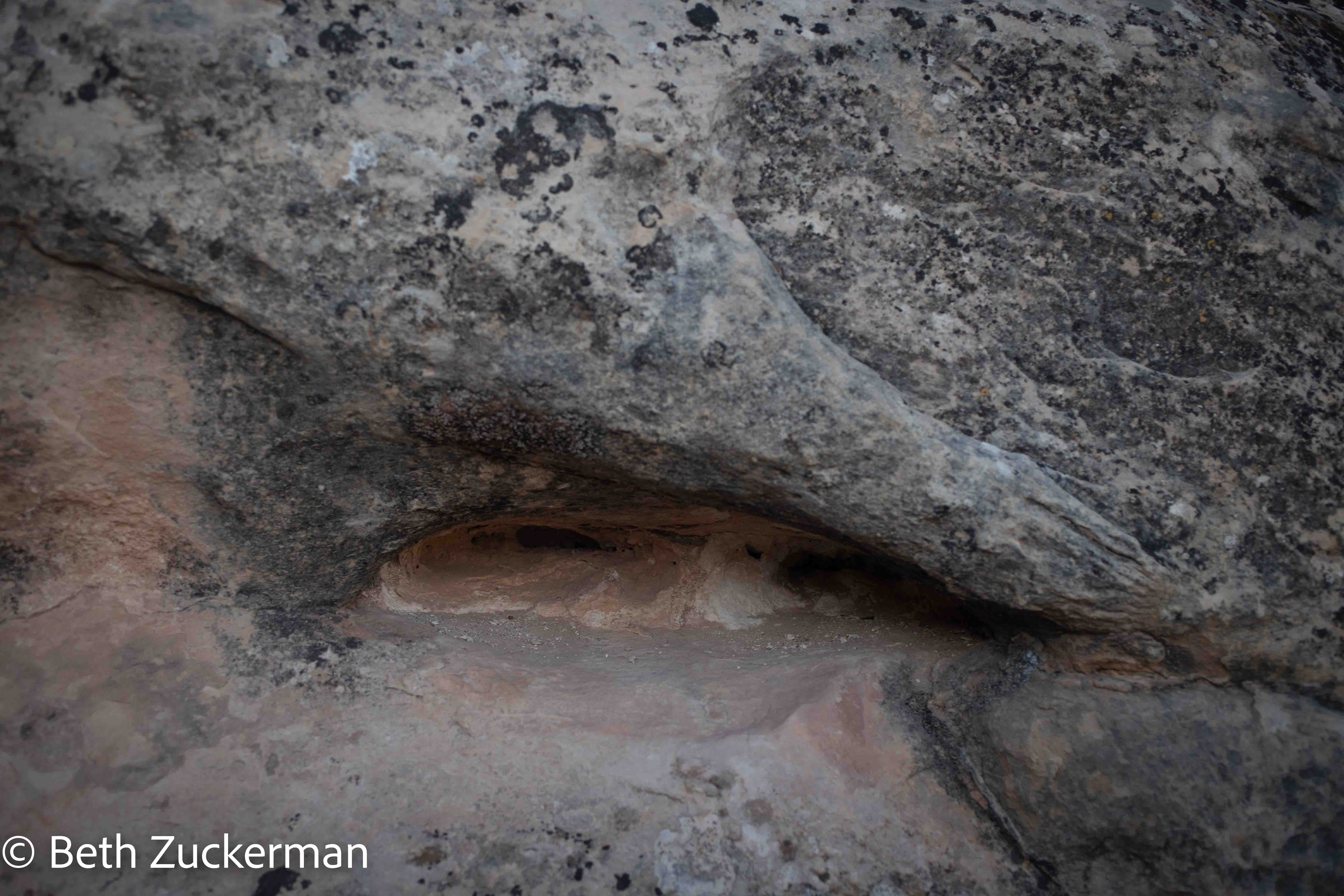
On the way back up, I found the rock looking back at me.
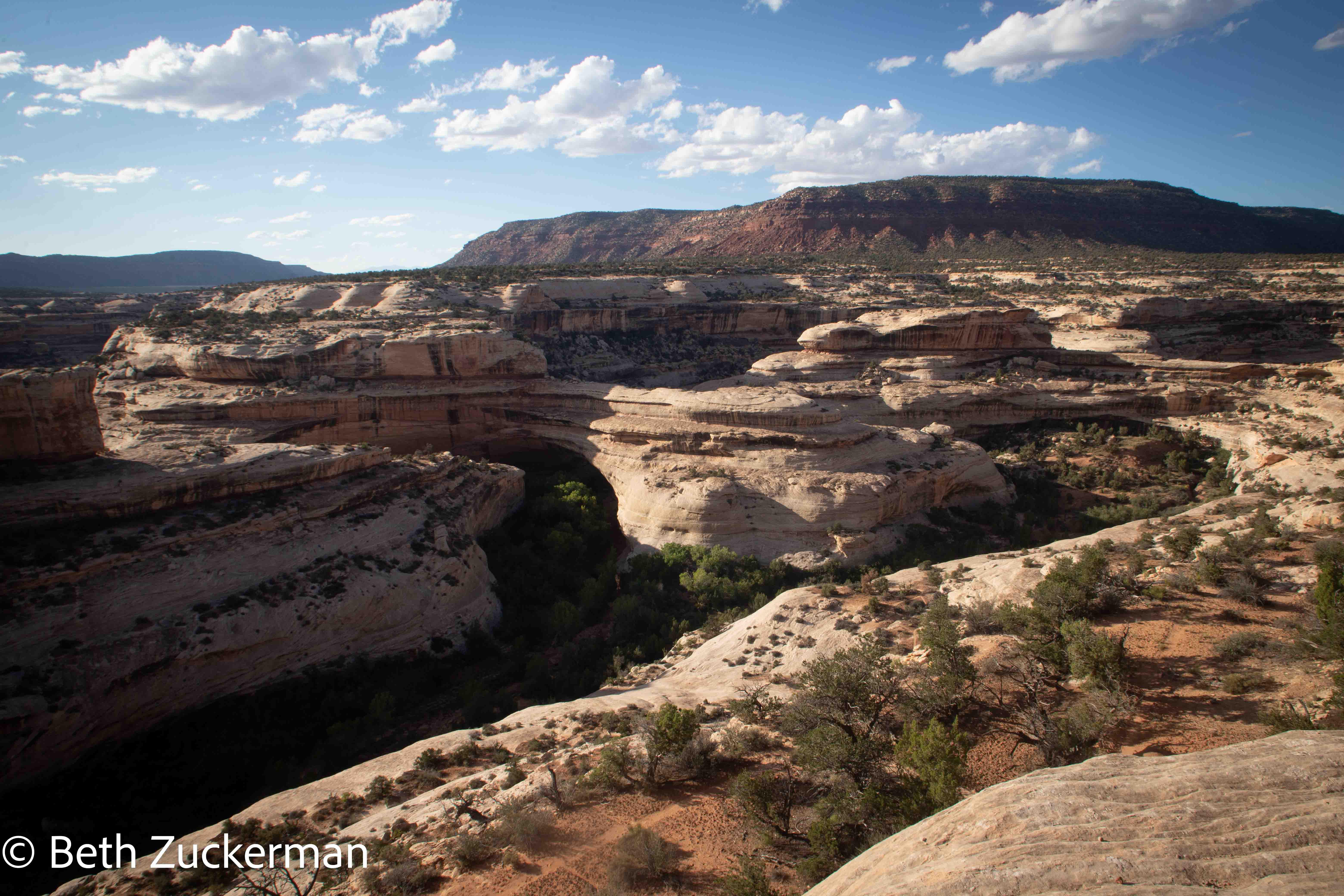
We did not have time to hike down to Kachina Bridge, but saw it from the overlook. The youngest and sturdiest of the three bridges in the park, it spans 62 m/204 feet and is 64 m/210 feet high. [Geology Underfoot in Southern Utah, Orndorff, Wieder, & Futey, 2006]
It was only a short hike down to Owachomo Bridge, so we couldn't resist. Considering what happened later, it probably would have been better if we'd skipped this one and been able to do more of our driving in the light.
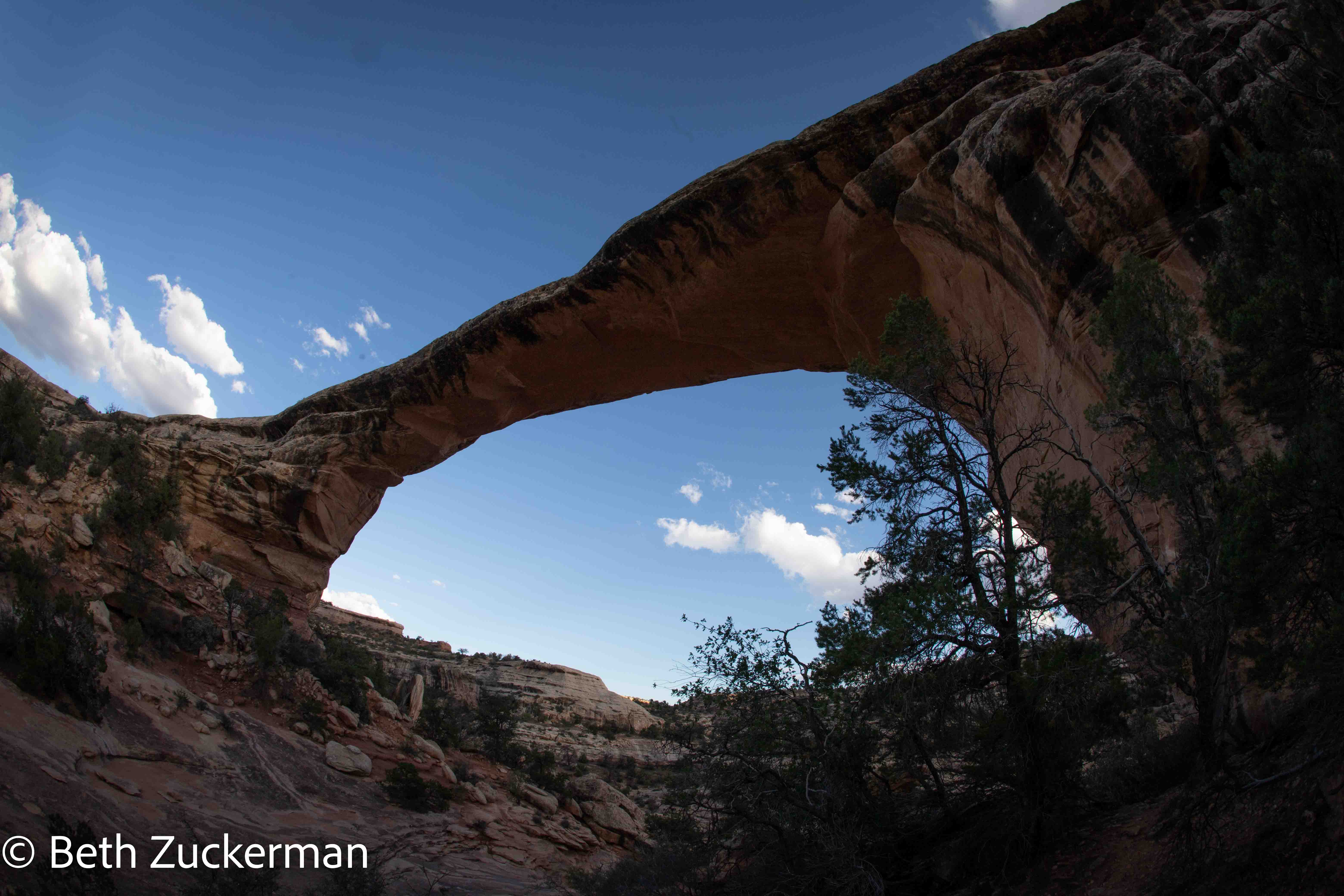
Owachomo Bridge is the oldest bridge here, and geologists are unsure of its age. Estimates vary widely, from 30,000 years to 100,000 years. This venerable bridge is 32 m/106 feet tall, and spans 55 m/180 feet. [Geology Underfoot in Southern Utah, Orndorff, Wieder, & Futey, 2006]
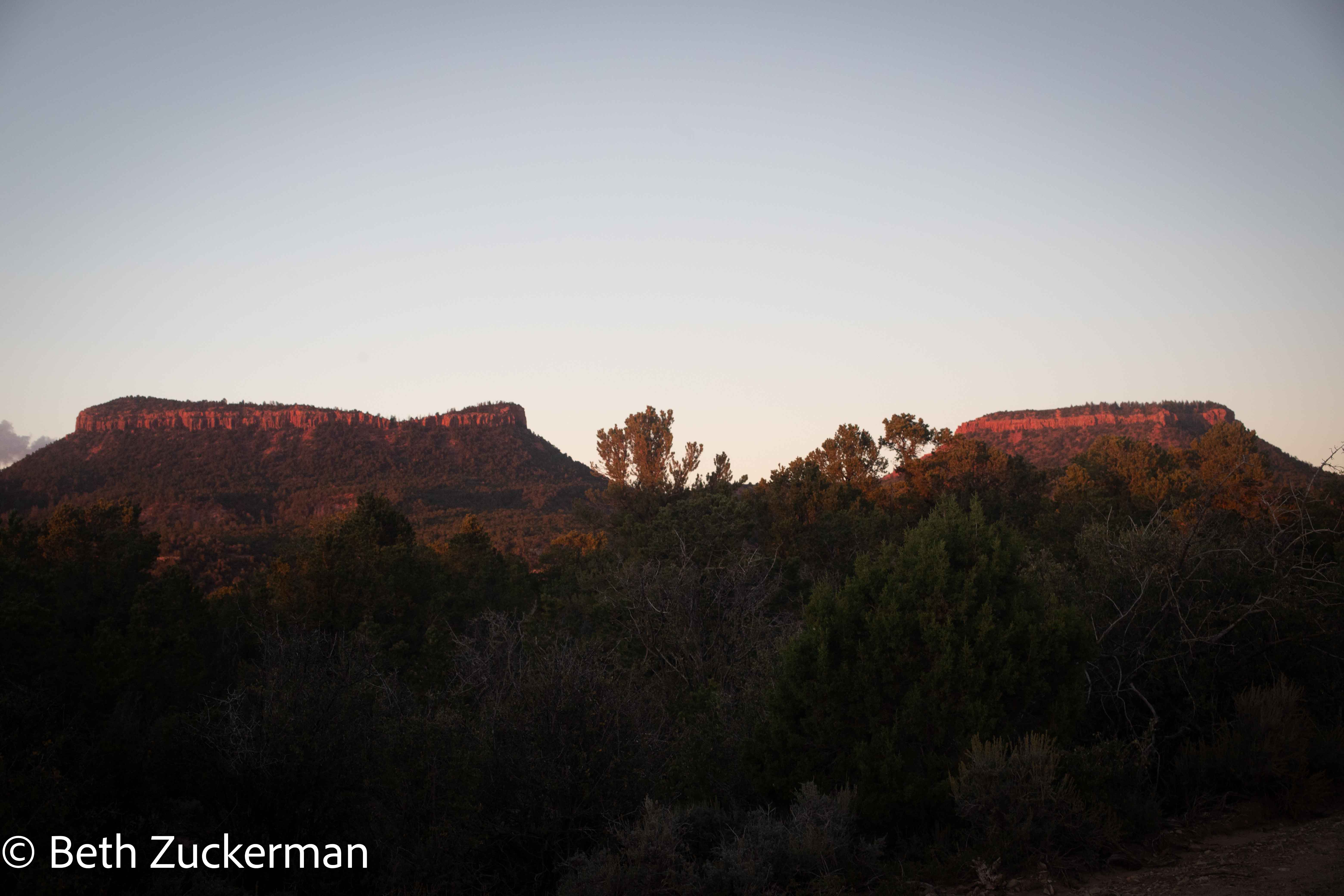
The primary road into endangered Bears Ears National Monument was closed due to construction, but there is an auxiliary dirt road into the monument off the road into Natural Bridges. While the sun was setting, we wanted to see this special and threatened place, and, in particular, be able to assert personal experience with it in the ongoing debate about its future. (I recently took a long lunch to participate in an online forum about the future of Grand Staircase Escalante National Monument conducted by the Bureau of Land Management.)
The Bears Ears in the fading light.
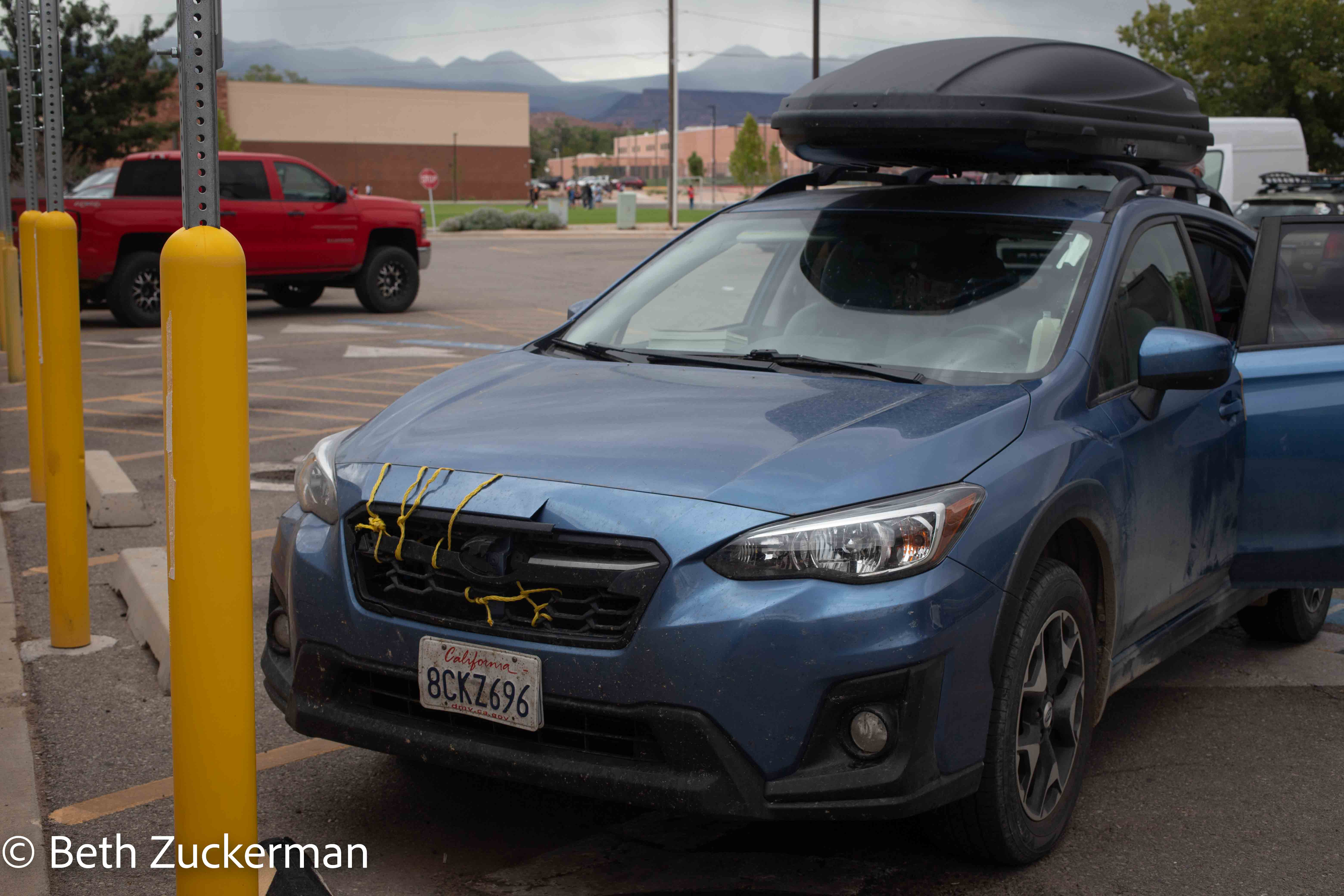
We were still a considerable distance from our lodging for the night, in Moab, and actually needed to continue south a bit on UT 95 before turning north on US 191. I was looking down at the laptop processing photos when I heard an ominous thud and felt a sickening lurch. Fortunately, I did not see the poor animal's head, but I saw enough of its body to identify it as a fawn. It was a tragic ending to an otherwise lovely day.
The damage to Mather was minor, and we felt much worse for the animal. Eric fashioned a serviceable grill-substitute with some line that we had handy in the wayback.
On to Arches National Park.