Shasta State Historic Park and Bidwell Park
Monday, 2 August, 2022
1856 Barn
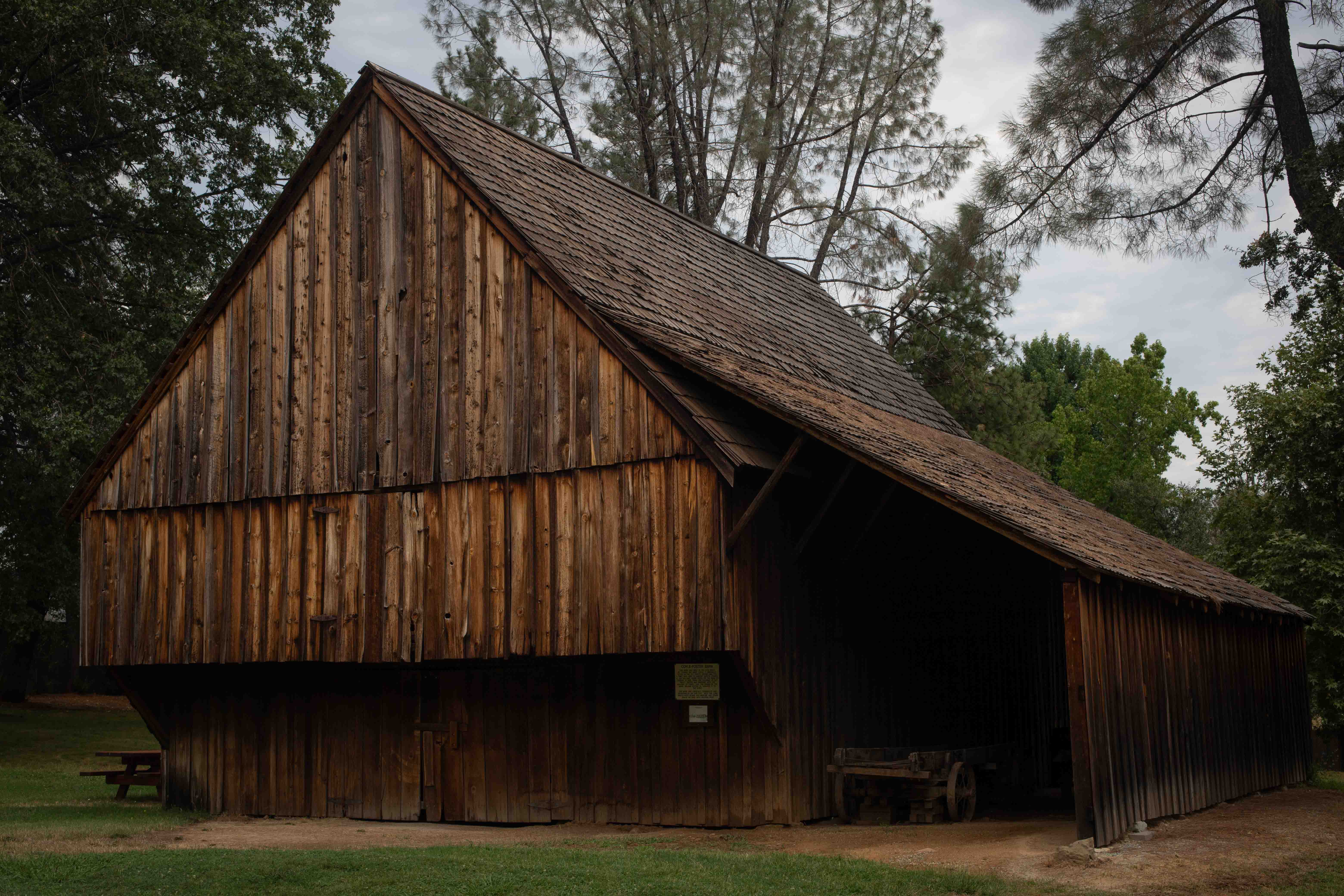
By Monday morning, the weather had cooled considerably, and very light precipitation was falling as we packed up Mather and bid our goodbyes to our peaceful cabin at Ripple Creek. Not enough water to make much of a difference in Mather's surface dirt, but perhaps enough to aid some thirsty plants.
Our original, outlandish plan for our anniversary weekend had been to visit Crater Lake, finally ride the Wizard Island boat that has eluded us so many times in the past, and, incidentally, on our way, find geocaches in 5 of the remaining 7 of California's 58 counties that remain on our list: Butte, Yuba, Sutter, Plumas, and the remote northeastern Modoc. But, with the boats still not running to Wizard Island, we instead pulled out Soares' wonderful book.
While Plumas and faraway Modoc will have to remain for now as a future plan to make an excessive detour and put too many more miles on Mather, we examined the map and decided that, without spending too much extra time, we could take the long way home on Monday and at least check off Butte, Yuba, and Sutter. So, we started up Michener's "Alaska" and headed for Chico.
As we headed south, Eric noted that, along CA 299 on the way north, we had passed through the town of Shasta, mentioned in Soares' book as a ghost town. As we had had to check out of the cabins by 10:00, we decided we had time for a late-morning visit to the town, now a State Historic Park. The actual museum is closed Mondays, Tuesdays, and Wednesdays, but a quick poke around proved that there was plenty that was worth checking out even without visiting the museum.
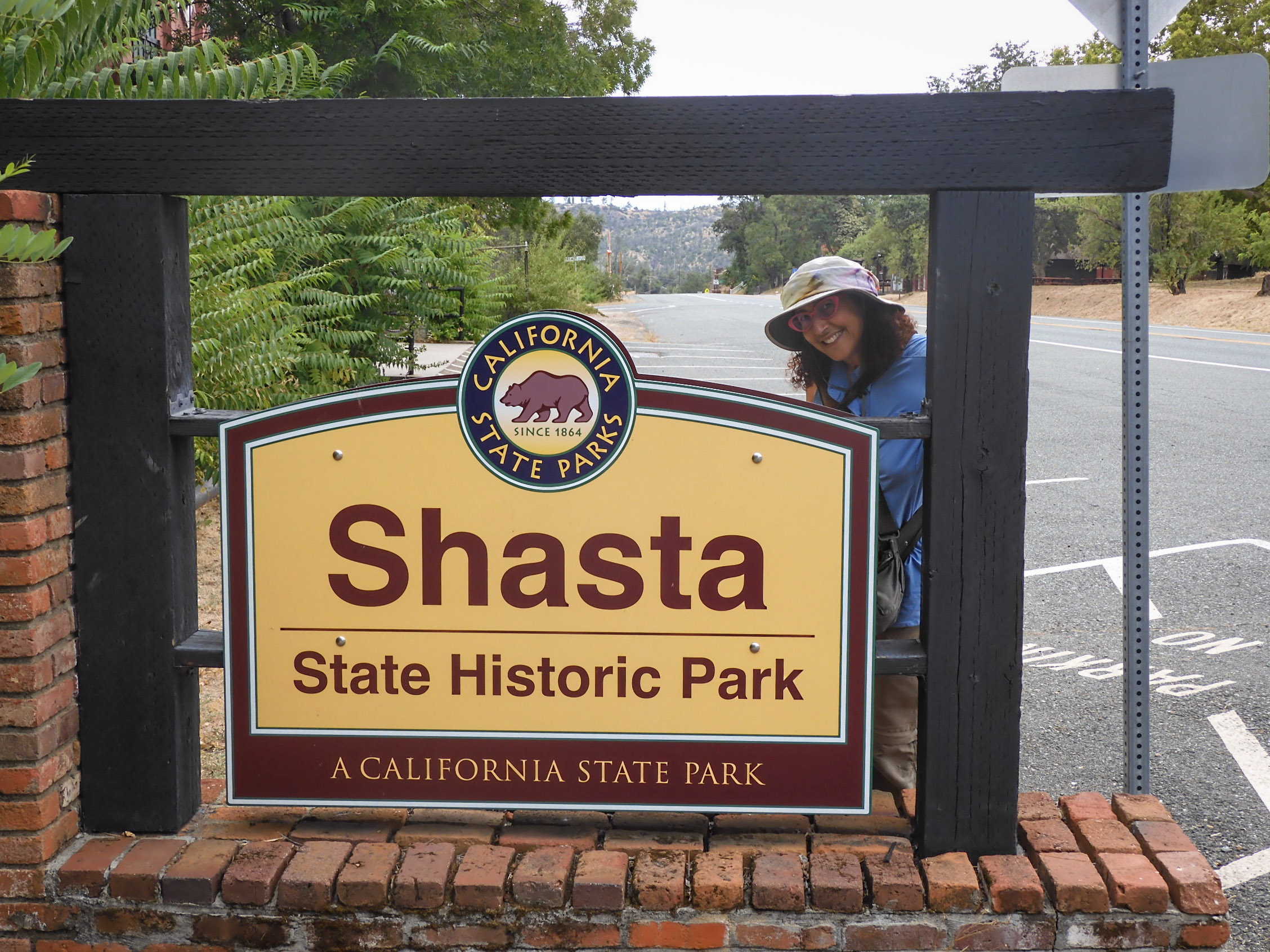
Eric took my picture with the sign. Fortunately, the day was overcast and cooler, and the light raindrops continued.
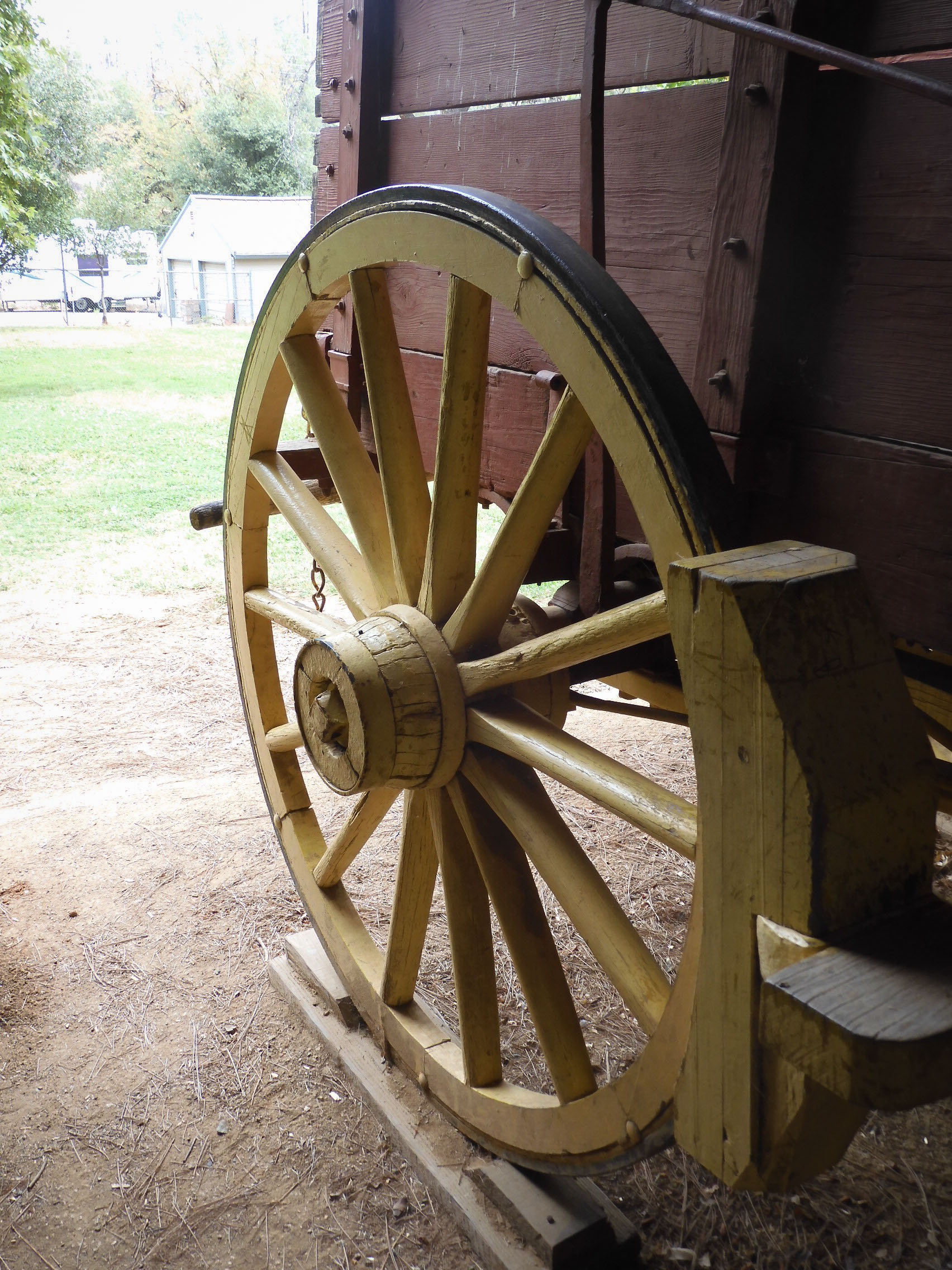
We were fascinated by this ancient wagon inside the barn.

Eric photographed the tall wheels.
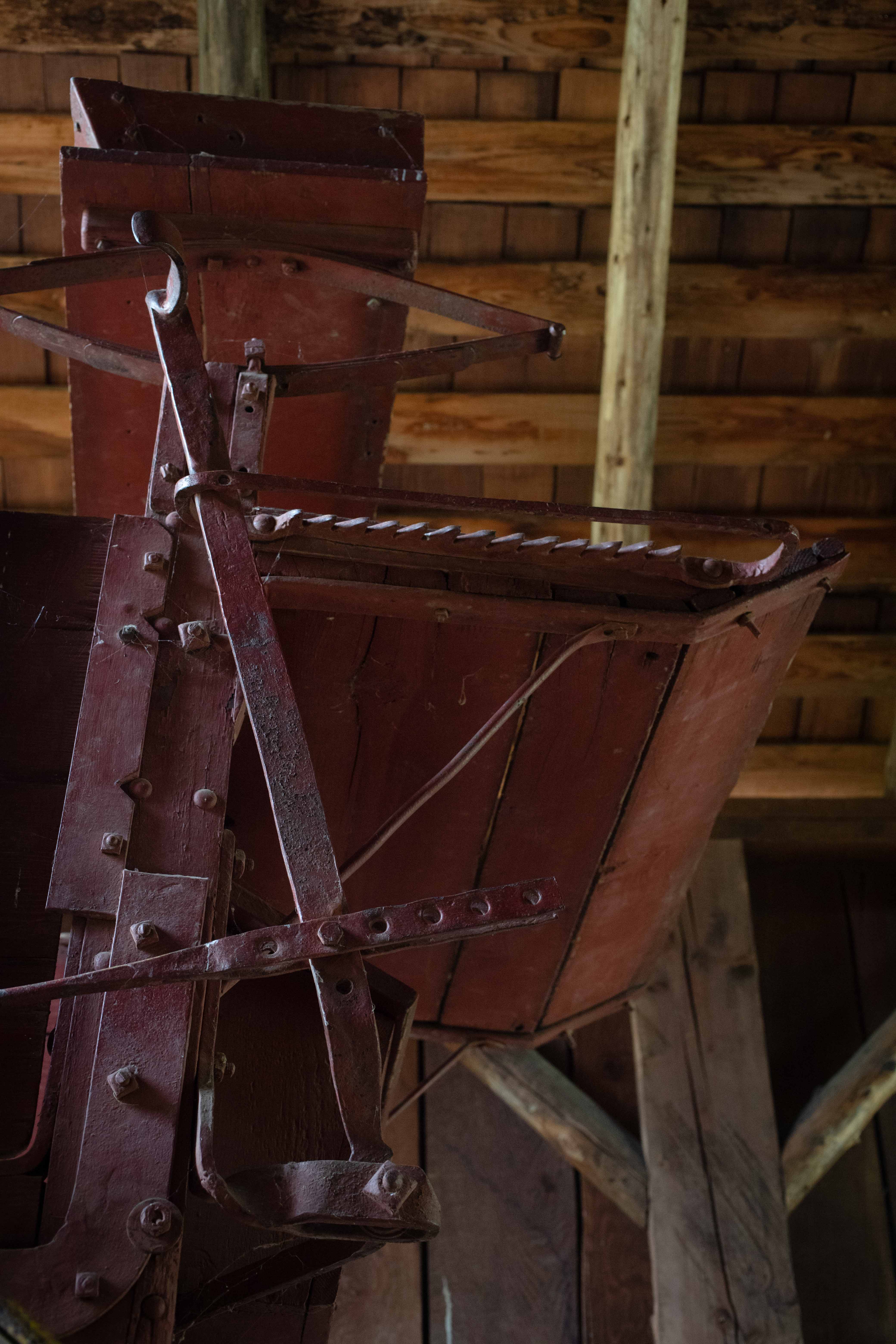
I liked the high-up driver's seat, with visible springs for suspension.
A fire destroyed most of the town in 1852, but several brick buildings on the other side of CA 299 had survived. Photo by Eric.
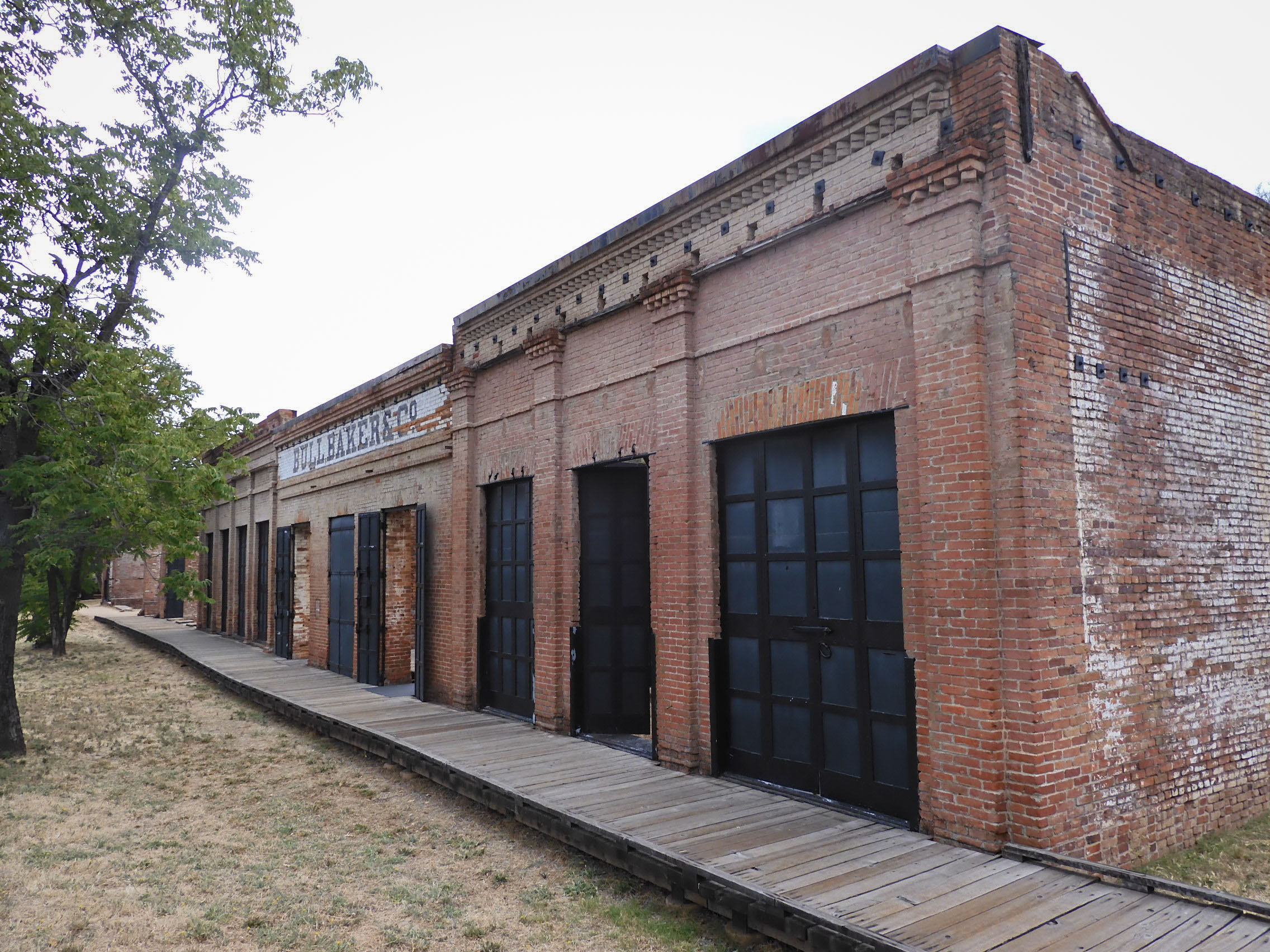
But, other than the facades, which have been heavily seismically braced by the California Department of Parks and Recreation, they were ruined by the ravages of time.
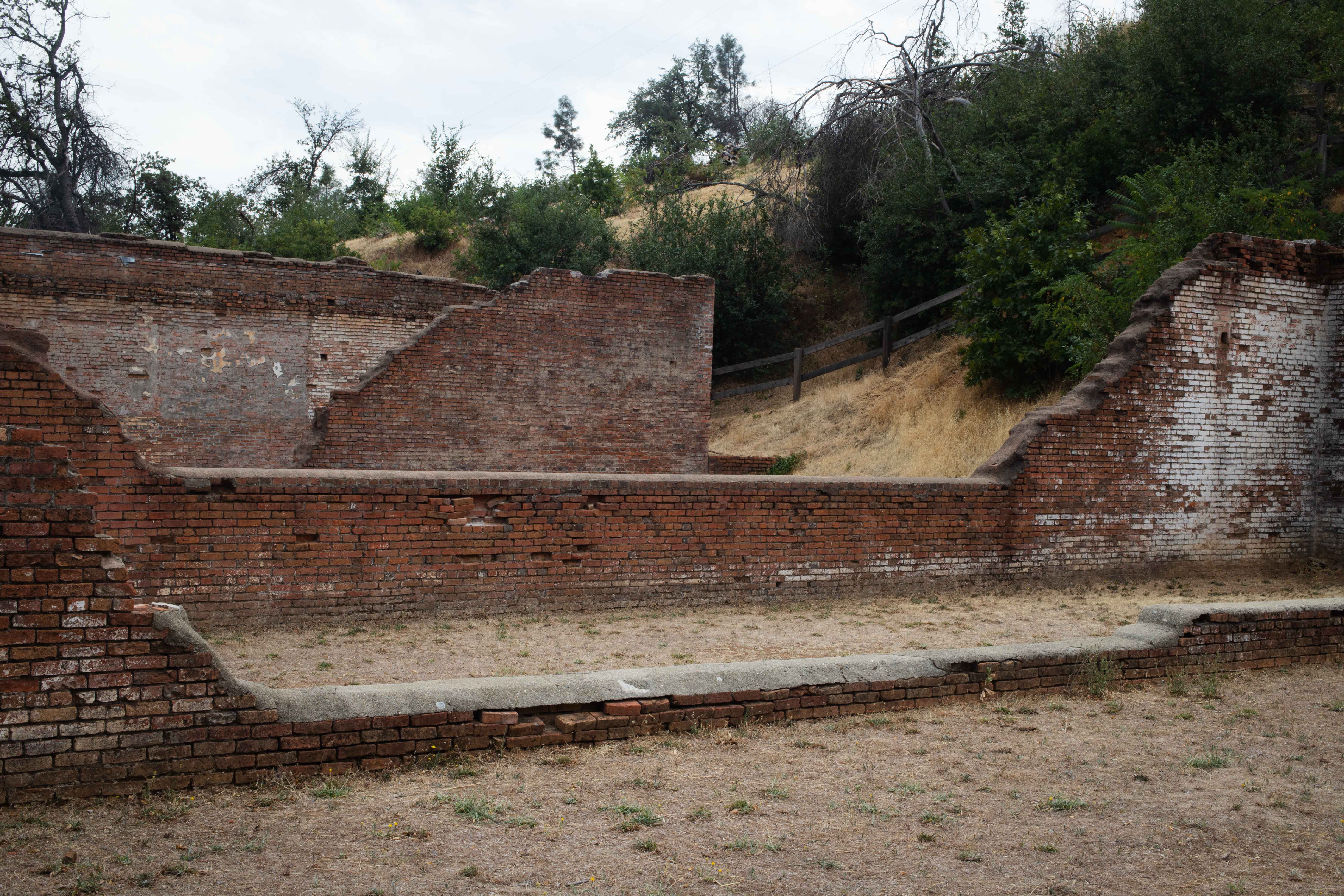
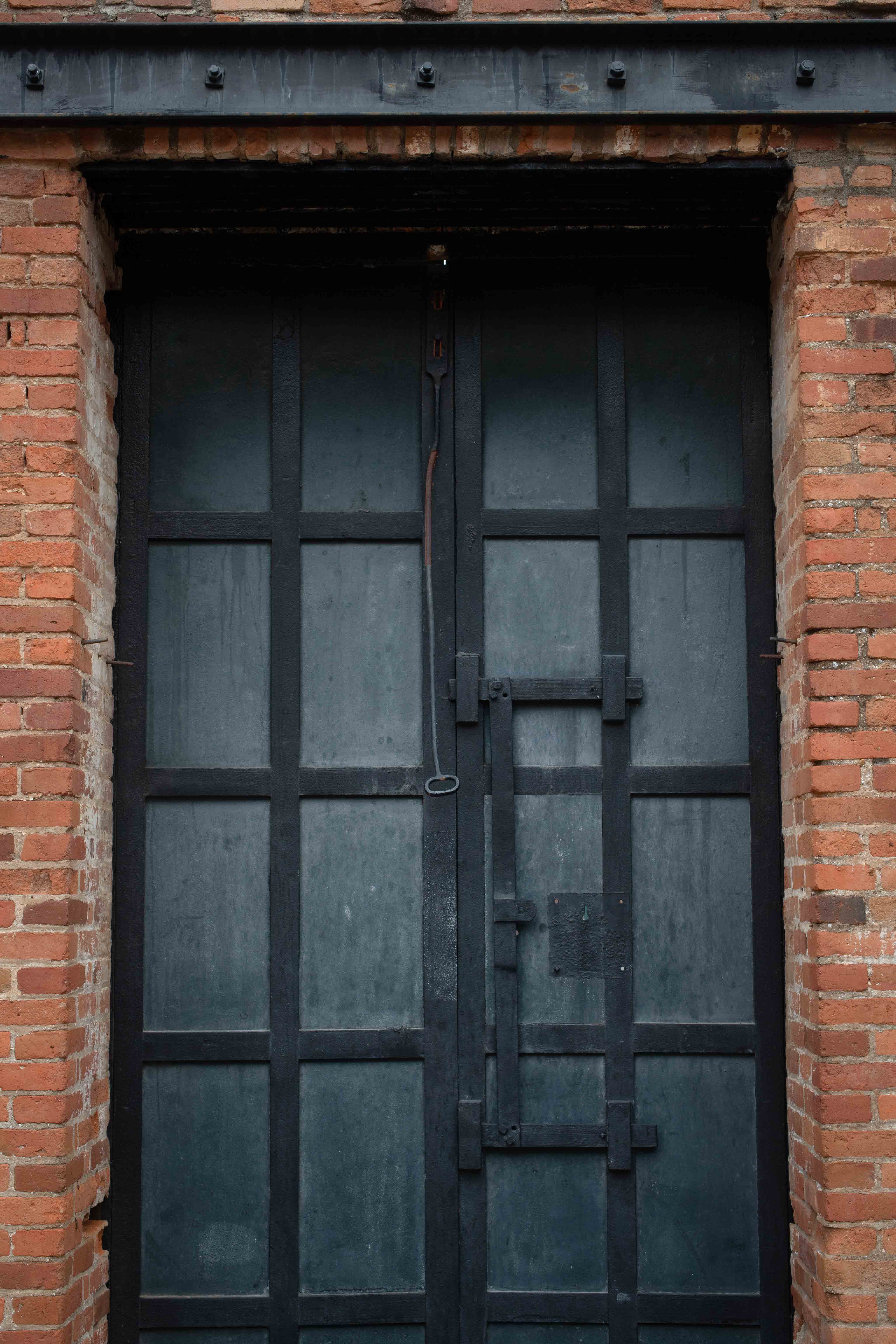
You can see some of the State's seismic bracing above these old iron doors.
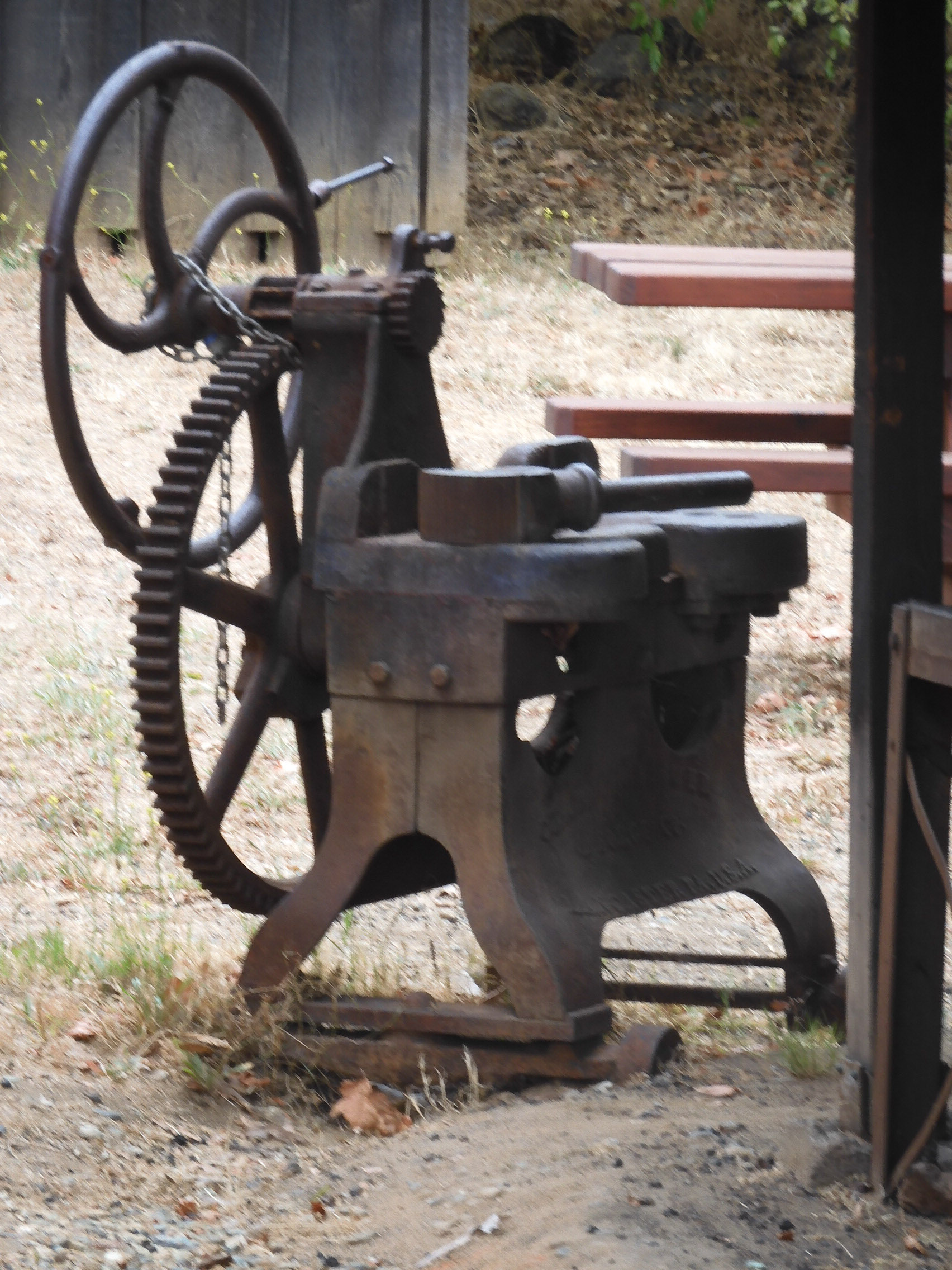
Eric photographed some of the equipment at the blacksmithing shop where the ancient ironworks had been fabricated.
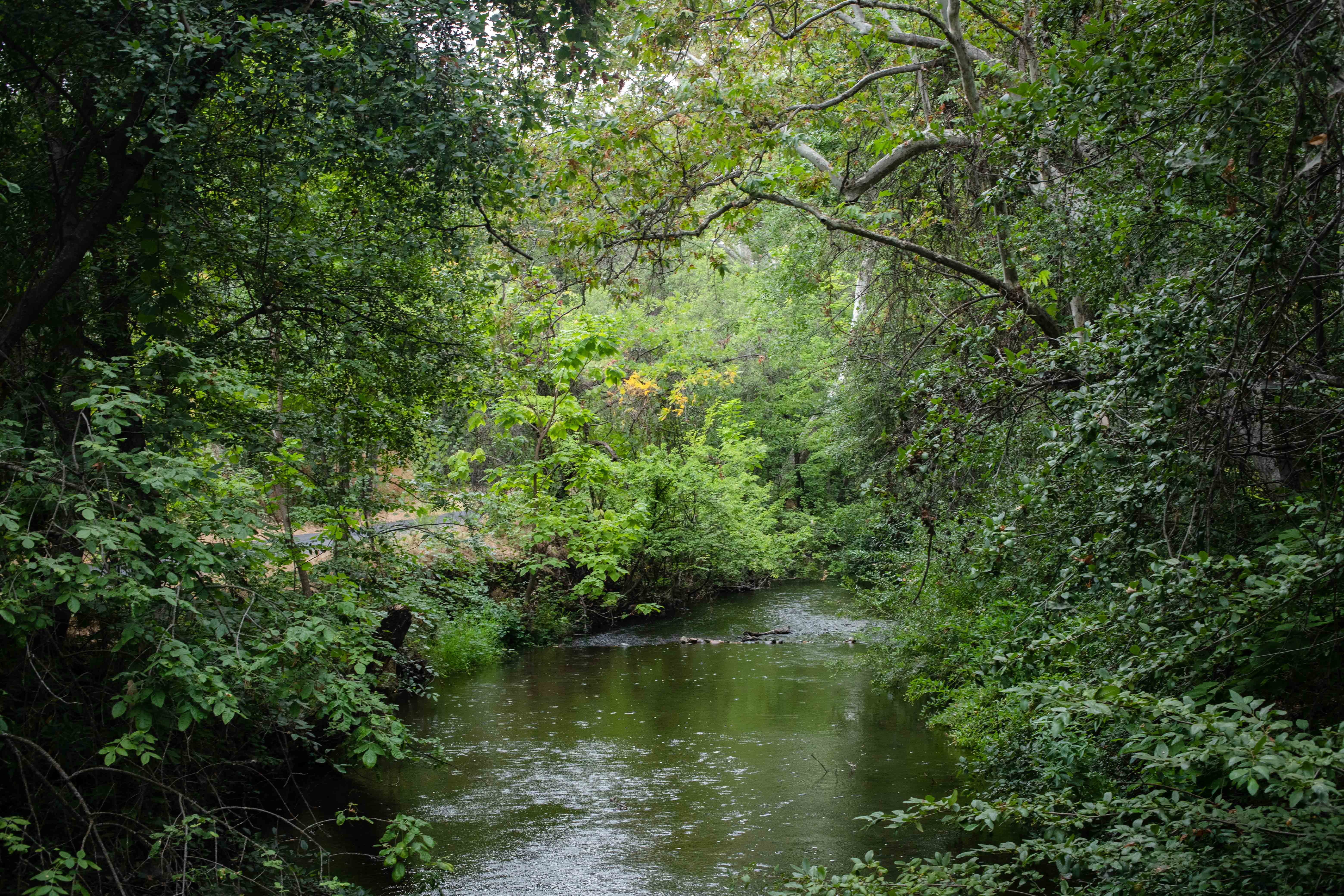
After this time-consuming but worthwhile historic stop, we headed west for Butte County, where we visited heavily-forested Bidwell Park in Chico. The park is dominated and divided by the Big Chico Creek.
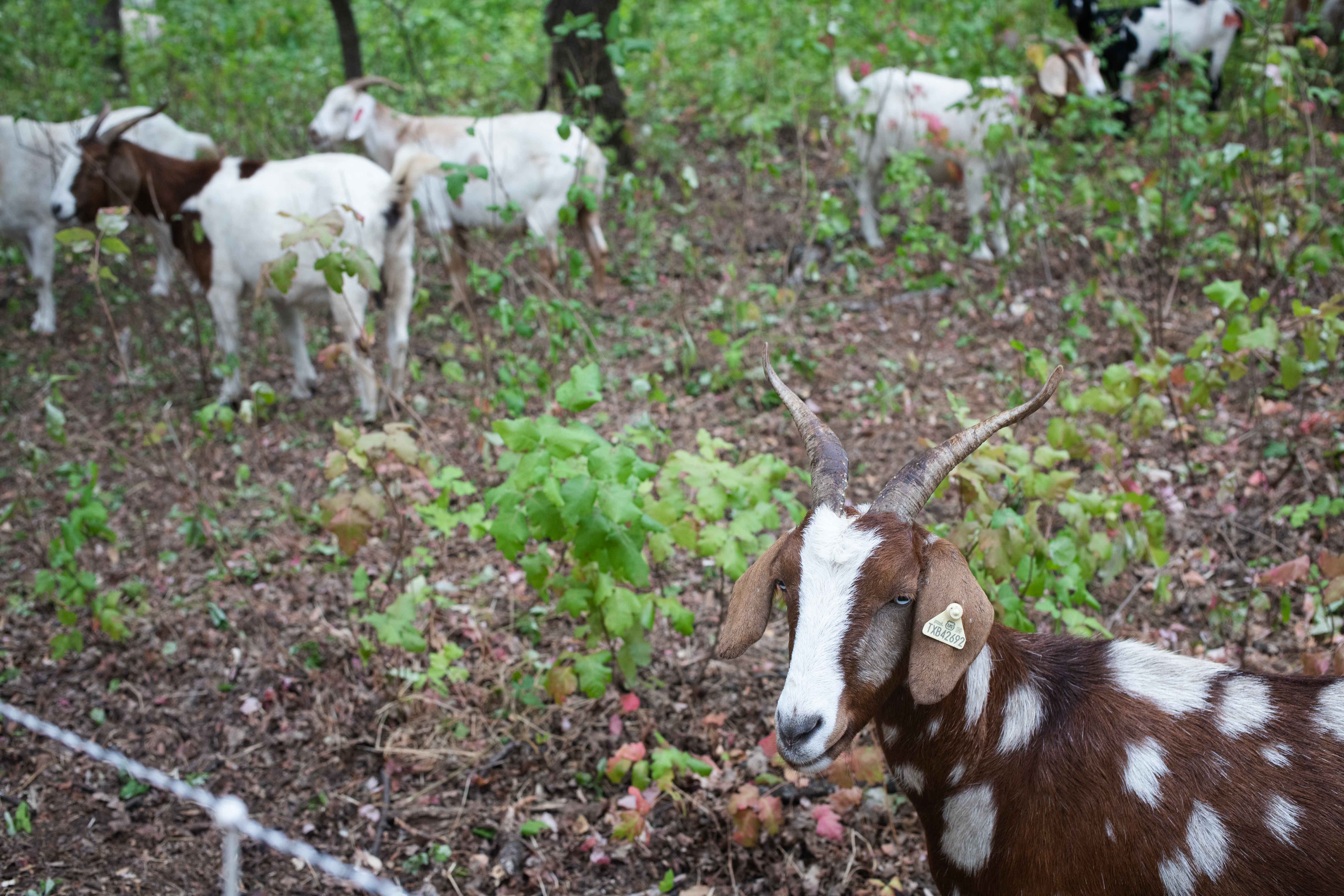
A team of goats was clearing brush under the trees. We had to hope they liked to eat poison oak, because that certainly seemed to be the dominant ground cover. One could hardly leave any of the paths without running into it.
We had to walk about 1.6 km/1 mi to find the cache, because it was on the other side of the creek from where we had parked Mather, and we had to find a bridge.
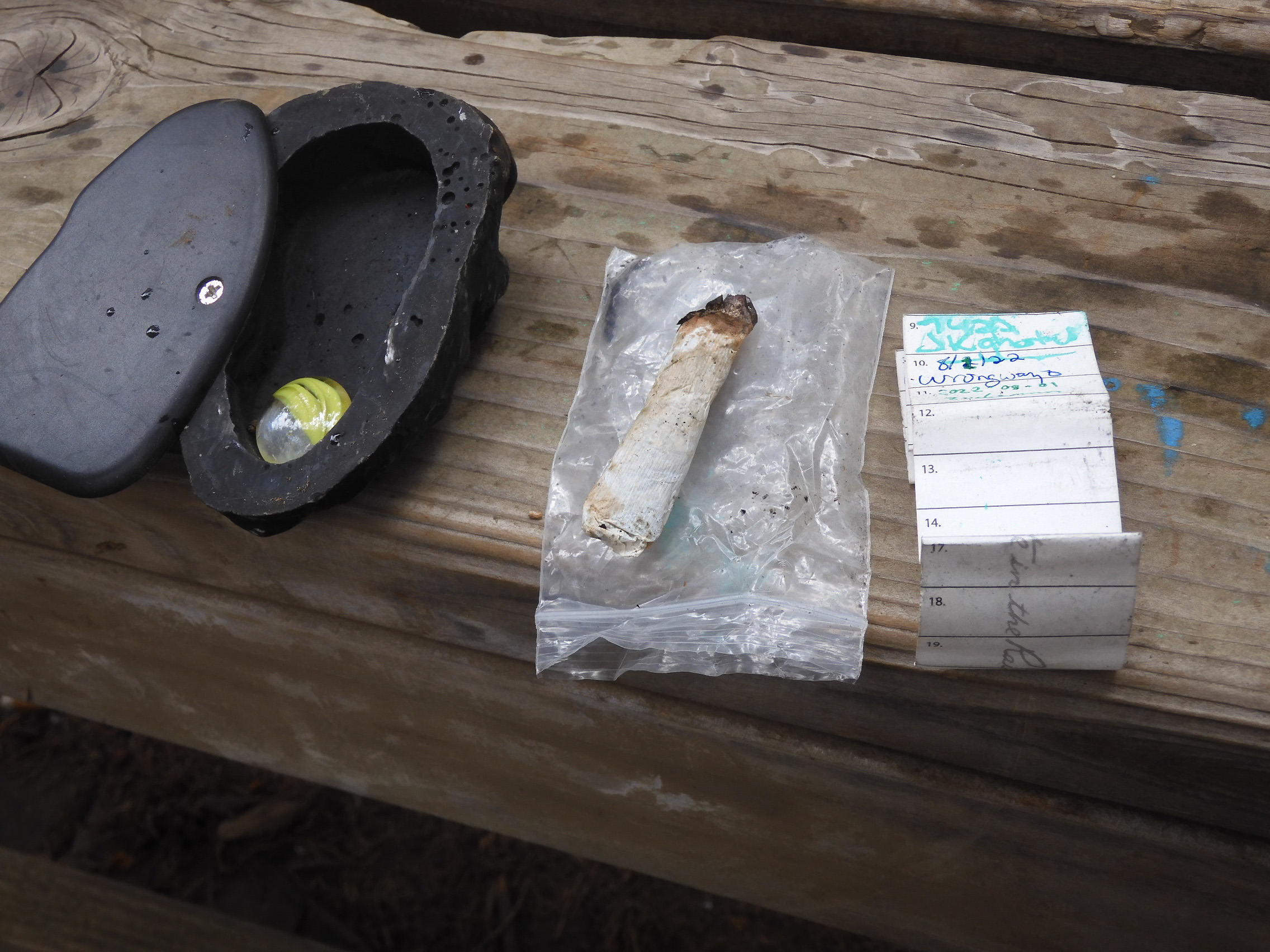
When we finally found the cache, we found something in that we had never seen in a cache before. Both organic and scented materials are prohibited in caches -- and everything is supposed to be "family-friendly"! Eric chucked the offending item into the surrounding ground cover. Perhaps, the squirrels had an interesting time with it.
We next headed to Yuba County, where we found a relatively unmemorable cache by the side of the highway near a nondescript graffitied bridge. I'm sure there are more interesting places in Yuba County, but this was convenient. The most interesting thing about that one was that it had been in the town of Mello, the surname of the São Paolo side of the family. We stopped in Marysville at a shake-and-fries stand and had a loud highway-side picnic dinner at some tables in their parking lot.
Eric had planned a backup cache for each of our three target counties, and the backup cache for Yuba County had been a puzzle he had solved. The puzzle was actually the "main" Yuba County find, but it was much further to the south than the Mello cache. He wanted to go a bit out of our way to the east to find the puzzle. It was also a nondescript guardrail cache by the side of the highway. So, the most exciting part of Yuba County for us was my jalapeño-laden sandwich.
We headed next for Sutter County, where we found a cache from September of 2000, about eight days prior to the placement of our previous Oldest Find, purportedly the first placed in northern California. The spot was otherwise relatively uninteresting. So, while the day lacked the dramatic scenery and water exposures of the previous two, it was a more interesting way to get home than simply heading down I-5, and it was a satisfying caching day. It was 21:45 by the time we reached the Zuckershack, coming to the Russian period in Michener's narrative.